
In today’s fast-paced digital era, every business—small or large—is looking for ways to establish a strong online presence. The rise of the internet and mobile technology has drastically changed how companies communicate, advertise, and engage with their customers. This transformation has opened the door to one of the most powerful and dynamic industries of our time—digital marketing.
The scope of digital marketing has expanded beyond imagination, reshaping how businesses reach, influence, and retain customers in the digital age. From search engines and social media to artificial intelligence and voice search, digital marketing has evolved into a sophisticated system that drives global commerce and innovation.
In this blog, we will explore the scope of digital marketing, how it is shaping the future of businesses, and why every company needs to embrace it to stay ahead in the competition.
1. Understanding the Scope of Digital Marketing
Before diving deeper, let’s understand what digital marketing truly means.
Digital marketing refers to promoting products or services using online platforms such as search engines, social media, email, mobile apps, and websites. Unlike traditional marketing, it enables brands to connect directly with their target audience in real-time, track performance metrics, and achieve measurable results.
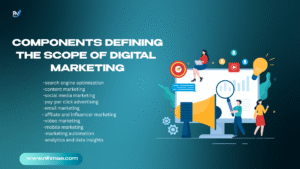
The scope of digital marketing encompasses a wide range of strategies and channels, including:
- Search Engine Optimization (SEO)
- Content Marketing
- Social Media Marketing (SMM)
- Pay-Per-Click Advertising (PPC)
- Email Marketing
- Affiliate Marketing
- Influencer Marketing
- Video Marketing
- Marketing Automation
- Analytics and Data-Driven Marketing
Each of these areas plays a crucial role in building brand awareness, driving website traffic, generating leads, and increasing sales.
2.Evolution of Digital Marketing
The evolution of digital marketing began in the early 1990s when the internet became widely accessible to the public. With the emergence of search engines like Yahoo and Google, businesses quickly recognized the growing scope of digital marketing and the potential it offered for increasing online visibility and customer reach. By the mid-2000s, social media platforms such as Facebook, YouTube, and Twitter revolutionized how brands communicated with their audiences.
The arrival of smartphones, mobile apps, and e-commerce platforms like Amazon and Flipkart further expanded this transformation, making digital marketing an essential business tool. Today, with advanced technologies such as artificial intelligence (AI), machine learning (ML), augmented reality (AR), and voice search, the scope of digital marketing continues to evolve, shaping a more innovative and connected future for businesses worldwide.
3. Why Digital Marketing is the Future of Business
Digital marketing is not just a passing trend—it’s the foundation of modern business growth. Let’s explore why it’s shaping the future of every industry.
a) Global Reach
Unlike traditional marketing, digital platforms allow brands to reach audiences across the globe. With a well-executed digital strategy, even small businesses can compete internationally and expand their customer base without huge investments.
b) Cost-Effective Marketing
Digital campaigns are more affordable than traditional advertising methods like TV, print, or billboards. Tools like Google Ads, Meta Ads, and email automation offer flexible budgeting options, making marketing accessible to startups and SMEs.
c) Real-Time Analytics
The biggest advantage of digital marketing is measurability. Businesses can track performance in real-time using analytics tools to understand what works and what doesn’t. This data-driven approach ensures better ROI and continuous improvement.
d) Targeted Audience Reach
Through detailed audience segmentation, marketers can target specific demographics based on age, location, interests, or behavior. This precision guarantees your marketing hits the mark, connecting with the right audience precisely when they’re most receptive.
e) Enhanced Customer Engagement
Social media and personalized communication channels enable brands to interact directly with customers. Engaging content, instant replies, and consistent interaction build trust and loyalty.
f) Adaptability and Flexibility
Digital platforms allow quick changes and adaptations in campaigns. If a strategy isn’t performing well, it can be modified immediately—something impossible in traditional marketing.
4. Components Defining the Scope of Digital Marketing
To truly understand the scope of digital marketing, we must explore its major components that drive business growth.
1. Search Engine Optimization (SEO)
SEO is the backbone of digital marketing. It involves optimizing website content and structure to rank higher on search engines like Google.
Scope:
- Keyword research and content optimization
- On-page and off-page SEO
- Technical SEO (site speed, mobile-friendliness)
- Local SEO for businesses targeting specific regions
An effective SEO strategy ensures long-term visibility and organic growth.
2. Content Marketing
Content is the heart of digital marketing. It includes blogs, articles, infographics, eBooks, videos, and podcasts designed to educate and engage the audience.
Scope:
- Blog writing and copywriting
- Video content and storytelling
- Content strategy and SEO alignment
- Thought leadership and brand authority
High-quality content builds trust, improves search rankings, and enhances brand reputation.
3. Social Media Marketing (SMM)
Platforms like Facebook, Instagram, LinkedIn, X (Twitter), and TikTok have become marketing powerhouses.
Scope:
- Brand awareness campaigns
- Influencer collaborations
- Social media ads and analytics
- Community building and engagement
Social media allows brands to humanize their image and build emotional connections with audiences.
4. Pay-Per-Click Advertising (PPC)
PPC is a model where advertisers pay each time a user clicks their ad. Platforms like Google Ads, Facebook Ads, and LinkedIn Ads provide measurable and targeted advertising options.
Scope:
- Search and display ads
- Retargeting campaigns
- Conversion rate optimization
- Budget and bid management
PPC provides immediate visibility and is ideal for generating quick results.
5. Email Marketing
Email marketing continues to play a vital role within the vast scope of digital marketing, serving as one of the most effective channels for building and maintaining strong customer relationships. Through personalized email campaigns, automated drip sequences, newsletter marketing, and customer re-engagement strategies, businesses can deliver targeted messages that foster trust and loyalty. As the scope of digital marketing continues to expand, email marketing remains a reliable, cost-effective method to drive conversions and long-term customer retention.
6 Affiliate and Influencer Marketing
Affiliate and influencer marketing play a significant role within the expanding scope of digital marketing, helping businesses reach wider and more targeted audiences through trusted partnerships. Companies collaborate with influencers or affiliates to promote their products and services using authentic recommendations that drive engagement and sales.
Scope:
-
Partnership with niche influencers
-
Affiliate link tracking and commission systems
-
Performance-based campaigns
This strategy strengthens brand credibility, boosts conversions, and enhances word-of-mouth promotion. As the scope of digital marketing continues to evolve, affiliate and influencer marketing remain essential tools for building trust and long-term brand visibility.
7. Video Marketing
Videos have become the most consumed content format online. Platforms like YouTube, Instagram Reels, and TikTok dominate user attention.
Scope:
- Product demos and tutorials
- Live streaming and Q&A sessions
- Brand storytelling through visuals
Video marketing enhances engagement and improves conversion rates.
8. Mobile Marketing
Mobile marketing has emerged as a vital element within the growing scope of digital marketing, offering businesses the ability to engage users anytime and anywhere. With over 6 billion smartphone users worldwide, this channel provides tremendous opportunities for personalized and real-time communication.
Scope:
-
SMS campaigns and push notifications
-
Mobile-optimized websites
-
In-app advertising
-
Location-based marketing
By adopting mobile-first strategies, brands can maintain strong connections with their audience on the move. As the scope of digital marketing continues to expand, mobile marketing remains a key driver of customer engagement and business growth in the digital era.
9. Marketing Automation
Automation tools simplify repetitive marketing tasks, ensuring consistent engagement.
Scope:
- Lead nurturing automation
- Workflow automation
- AI-driven personalization
- Chatbots and CRM integration
Automation saves time and increases campaign efficiency.
10. Analytics and Data Insights
Data is the foundation of all digital marketing strategies.
Scope:
- Tracking metrics like CTR, CPC, and ROI
- Customer behavior analysis
- Predictive analytics
- A/B testing for optimization
Analytics empower marketers to make informed decisions and refine strategies continuously.
5. The Expanding Scope of Digital Marketing in Different Sectors
The influence of digital marketing extends to almost every industry. Let’s see how different sectors are embracing it:
a) E-commerce
Digital marketing fuels the growth of online shopping. SEO, PPC, and social media ads drive traffic and sales for platforms like Amazon, Flipkart, and Shopify-based stores.
b) Education
Educational institutions use digital marketing to promote online courses, webinars, and certifications through search ads and social campaigns.
c) Healthcare
Hospitals and clinics leverage SEO and local search marketing to attract patients and share health-related content.
d) Real Estate
Real estate businesses use targeted ads, virtual tours, and content marketing to reach buyers digitally.
e) Travel and Hospitality
Travel brands use social media storytelling, influencer partnerships, and retargeting ads to inspire travelers.
f) Finance
Banks and fintech firms use email automation, content marketing, and digital ads to educate and acquire customers.
6. The Future Scope of Digital Marketing
The future of digital marketing looks brighter than ever. Here are some key trends that will define its direction:
a) Artificial Intelligence (AI)
AI enables personalized marketing, chatbots, predictive analysis, and smarter decision-making. It enhances user experiences and campaign accuracy.
b) Voice Search Optimization
With the rise of smart assistants like Alexa and Siri, optimizing for voice search is becoming essential.
c) Augmented and Virtual Reality (AR/VR)
Brands are adopting AR/VR for immersive product experiences, such as virtual try-ons and tours.
d) Video and Interactive Content
Short-form videos and interactive posts will continue dominating audience engagement.
e) Sustainability and Ethical Marketing
Consumers are increasingly drawn to brands that practice transparency and eco-conscious marketing.
f) Hyper-Personalization
AI and data analytics will make it possible to deliver customized messages for each user in real time.
g) Blockchain in Marketing
Blockchain technology will enhance transparency in digital advertising and secure data transactions.
7. Digital Marketing as a Career Option
With the ever-growing scope of digital marketing, career opportunities are booming. Businesses need skilled professionals who can manage campaigns, analyze data, and drive results.
Popular Job Roles Include:
- Digital Marketing Manager
- SEO Specialist
- PPC Expert
- Content Strategist
- Social Media Manager
- Email Marketing Specialist
- Data Analyst
- Marketing Automation Expert
Salary and Growth Potential:
The average digital marketing professional earns between ₹4 to ₹10 lakhs per annum in India, with rapid growth as experience increases. Freelancers and consultants also have immense earning potential globally.
8. Why Businesses Should Invest in Digital Marketing
Here’s why every business, regardless of size, must invest in digital marketing:
- Wider reach and visibility
- Cost-efficient marketing model
- Measurable and trackable outcomes
- Improved brand reputation
- Higher conversion rates
- 24/7 online presence
- Better customer insights
- Stronger competitive advantage
Digital marketing ensures that businesses stay relevant in an ever-changing digital ecosystem.
9. The Role of Digital Marketing in Building Brand Identity
A strong brand presence is the key to customer trust. Digital marketing helps build that identity through:
- Consistent messaging across platforms
- Valuable and relatable content
- Engagement through social media
- Positive customer experiences
- Authentic storytelling
With digital branding, businesses can create emotional connections that lead to long-term loyalty.
10. Conclusion for scope of digital marketing
The scope of digital marketing is vast, ever-evolving, and full of opportunities. As technology continues to advance, businesses that adapt to digital transformation will thrive in the competitive marketplace.
From SEO and content marketing to AI-driven automation and immersive experiences, digital marketing is shaping the future of business in ways we’ve never seen before.
Whether you’re a business owner, a student, or a professional, now is the perfect time to explore and invest in digital marketing. The world is online—and so should your business be.